

Memorandum
Wendy Roby
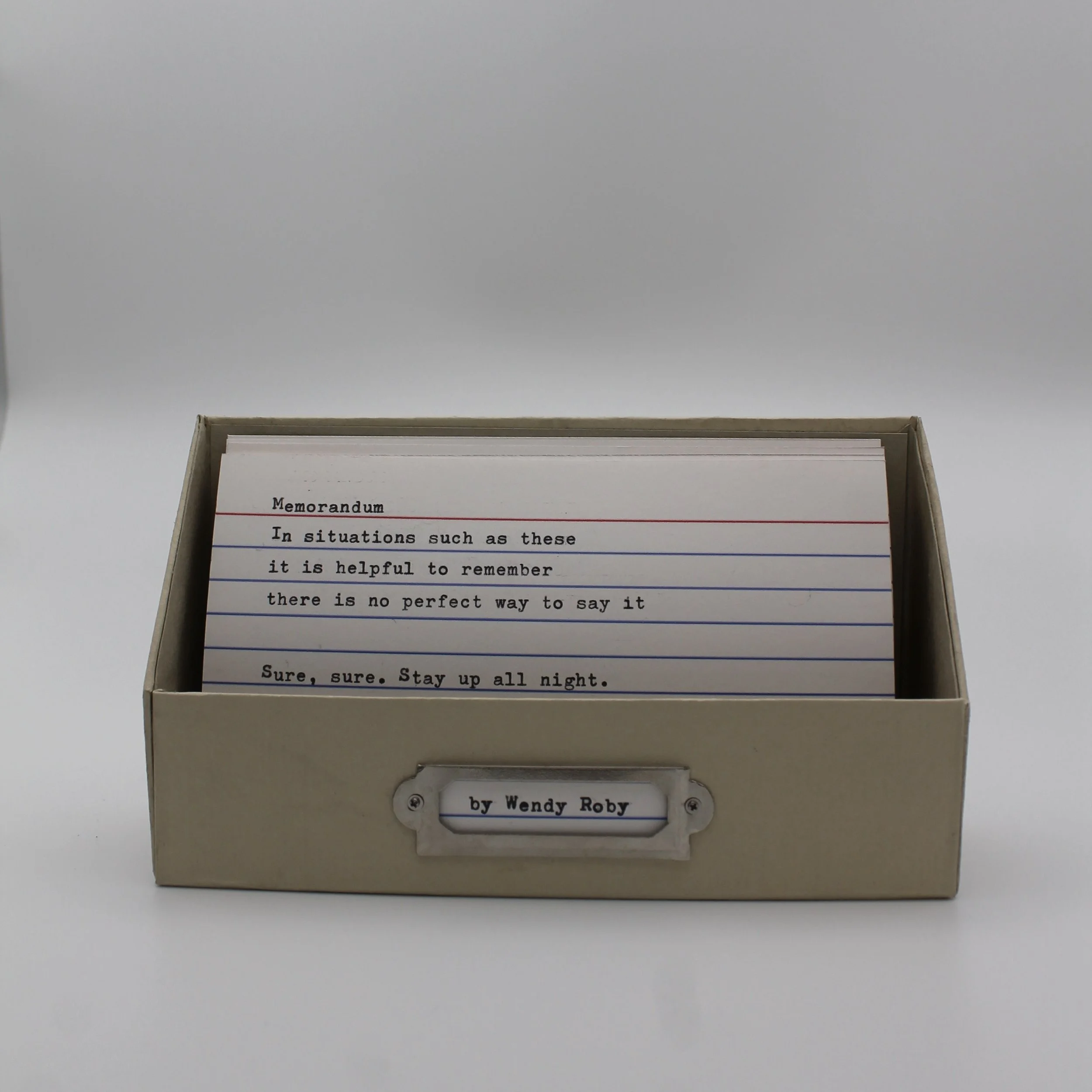
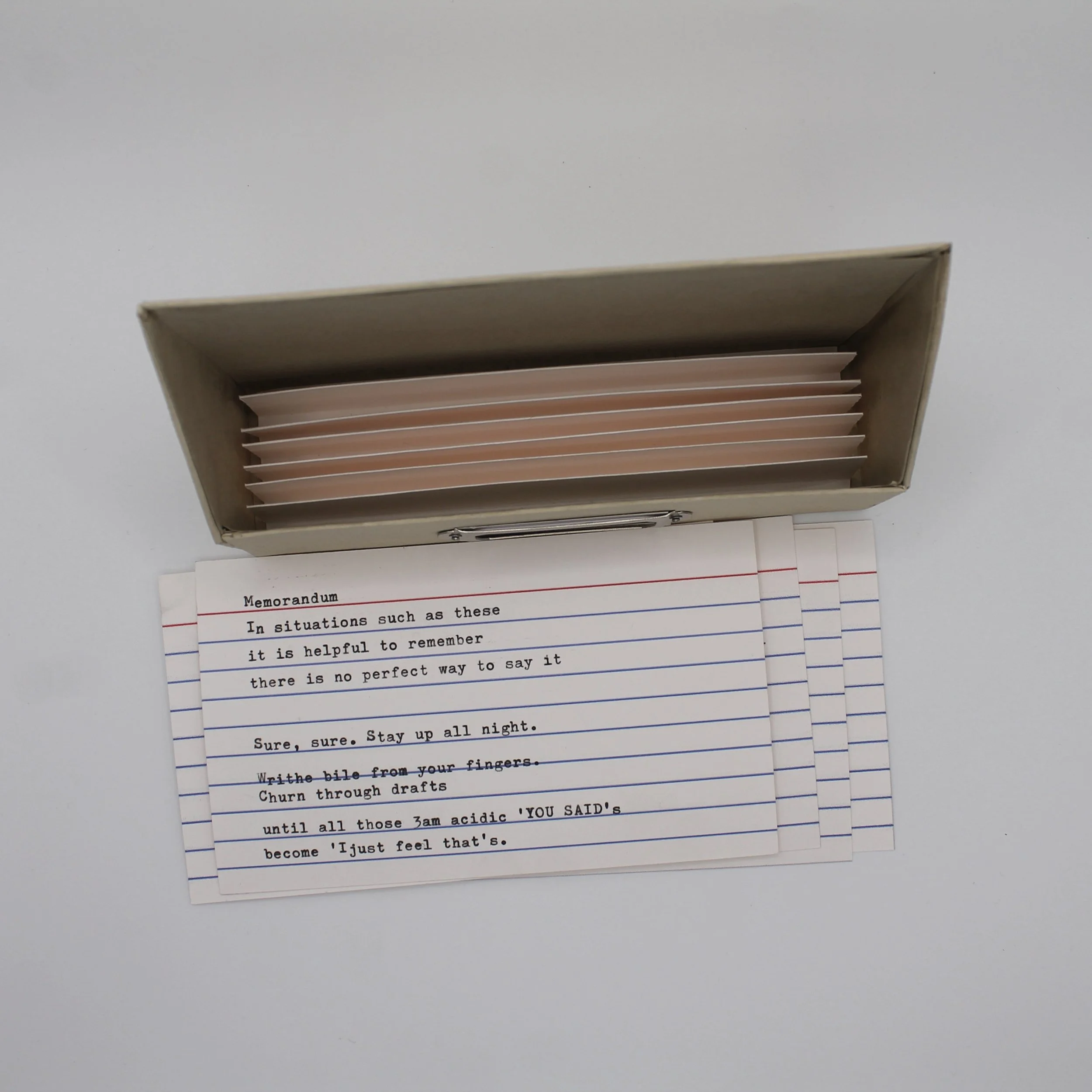
Memorandum, Poem on index cards in handmade box.
“I just find that kind of impotent rage really hilarious.”
Interview by L. Valena
September 17, 2025
Can you please describe the prompt that you responded to?
I was given a photograph of a man in traditional business attire with a briefcase that was smoking as if it was on fire. Because he's on a clifftop, it looks like something very dramatic is about to happen. It was a very rich prompt.
What were your first thoughts and feelings?
One of my favorite books is called The Fall and Rise of Reginald Perrin. It's about a man who is stuck in suburbia, taking the same train into his incredibly boring job every day, and decides to blow up his life. He leaves his clothes on the beach as if he's walked into the sea and died, but he actually just puts on a disguise. It's a classic, 1970's British comic novel, and it's one of the funniest things I've ever read. For a very long time, I worked in an office. The nonsense, and the way people speak, is a favorite subject of mine. I love the idea of people doing something completely transgressive in the middle of their working life.
Great! What happened next?
I went down a few blind alleys. I treated myself to a little etching press at Christmas. Normally I work in screenprinting – I make my own inks from plants, food waste and scrap minerals – but I've been trying to work with the etching press. Before I started working in art, I had a career as a writer. I was doing lots of journalism, but quite comedic stuff as well. I was writing a music journalism column every week, which was a lot about what was happening to me as I was listening to the music, rather than trying to dissect what genre it belonged in. Moving from writing into making visual art, it's been interesting to find ways to blend those two things. I wanted to write about rage in an office situation, the terrible emails you want to send when you are really furious with someone. I knew that I needed to start with a piece of writing, so that's what I did. I sat down and wrote something about that kind of rage that you experience in the middle of arguments with people. Once that program sort of embeds in your brain, thinking about what I'm going to say and then what they're going to say, that fantastical, overblown way that anxiety kicks into gear. And suddenly you're in this incredible French play in your brain, and it doesn't exist anywhere. I love all that stuff; I find it so funny. My brain really goes for it in that mode. So I've composed a lot of emails that I've never sent.
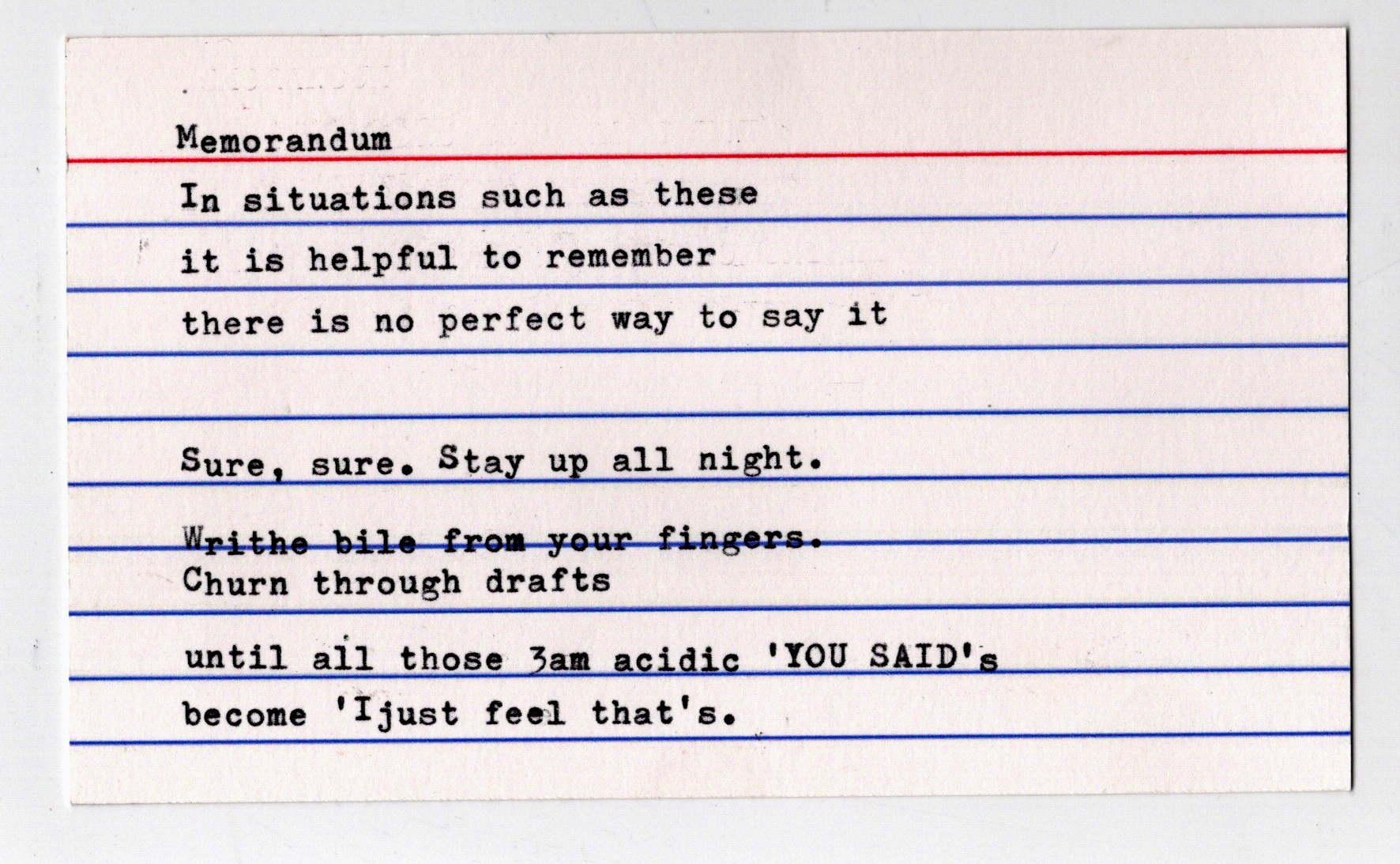
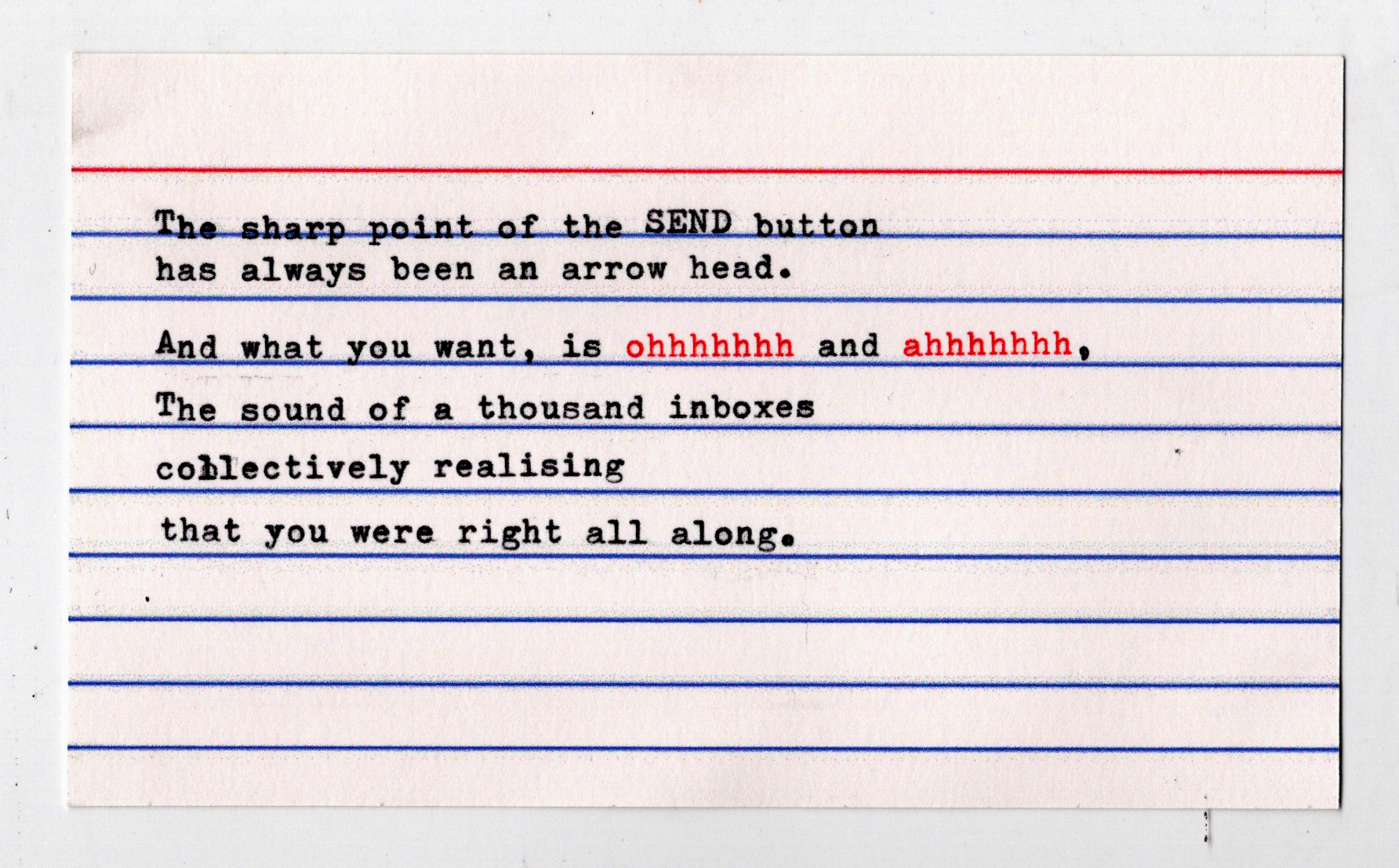
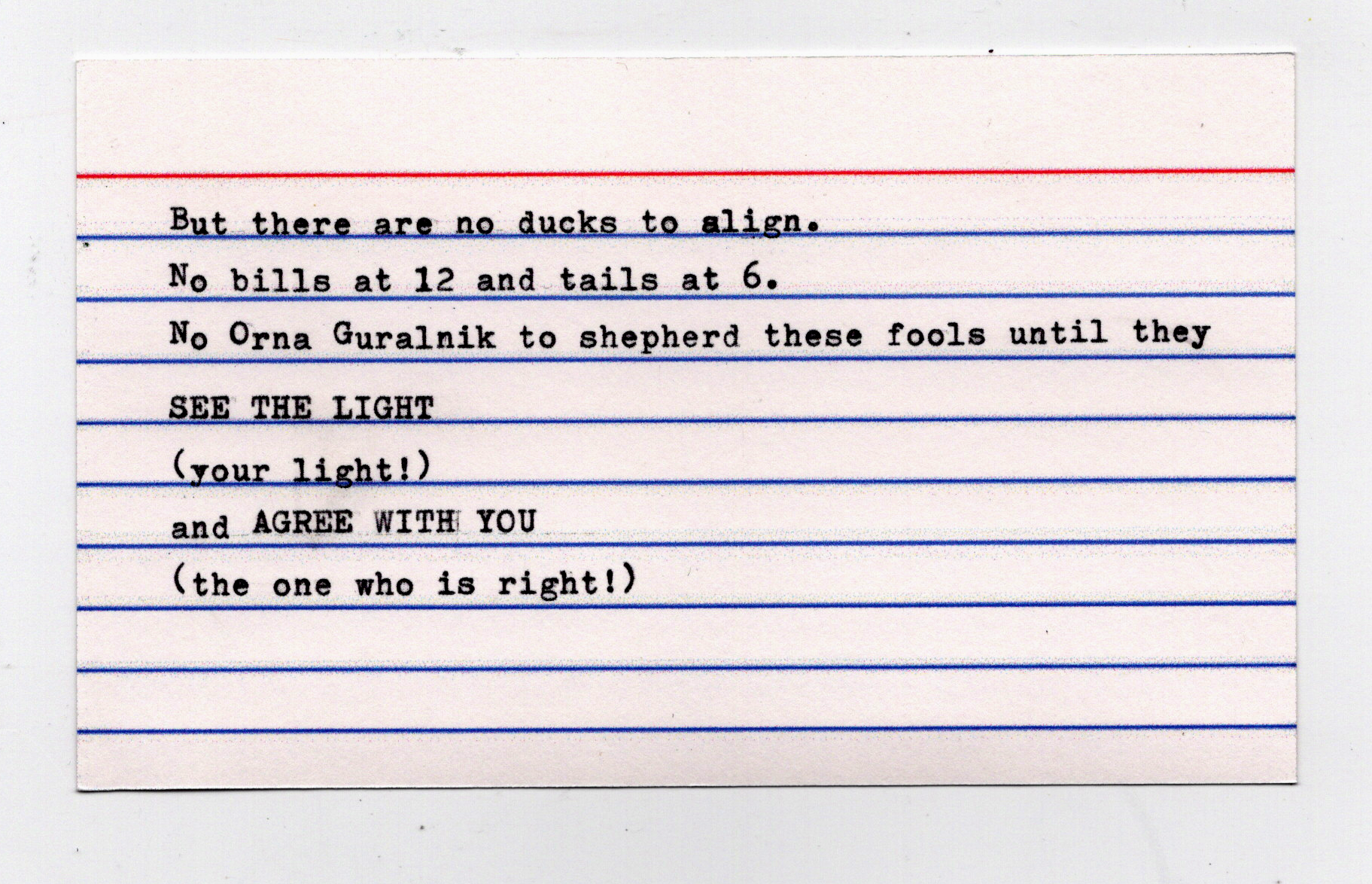
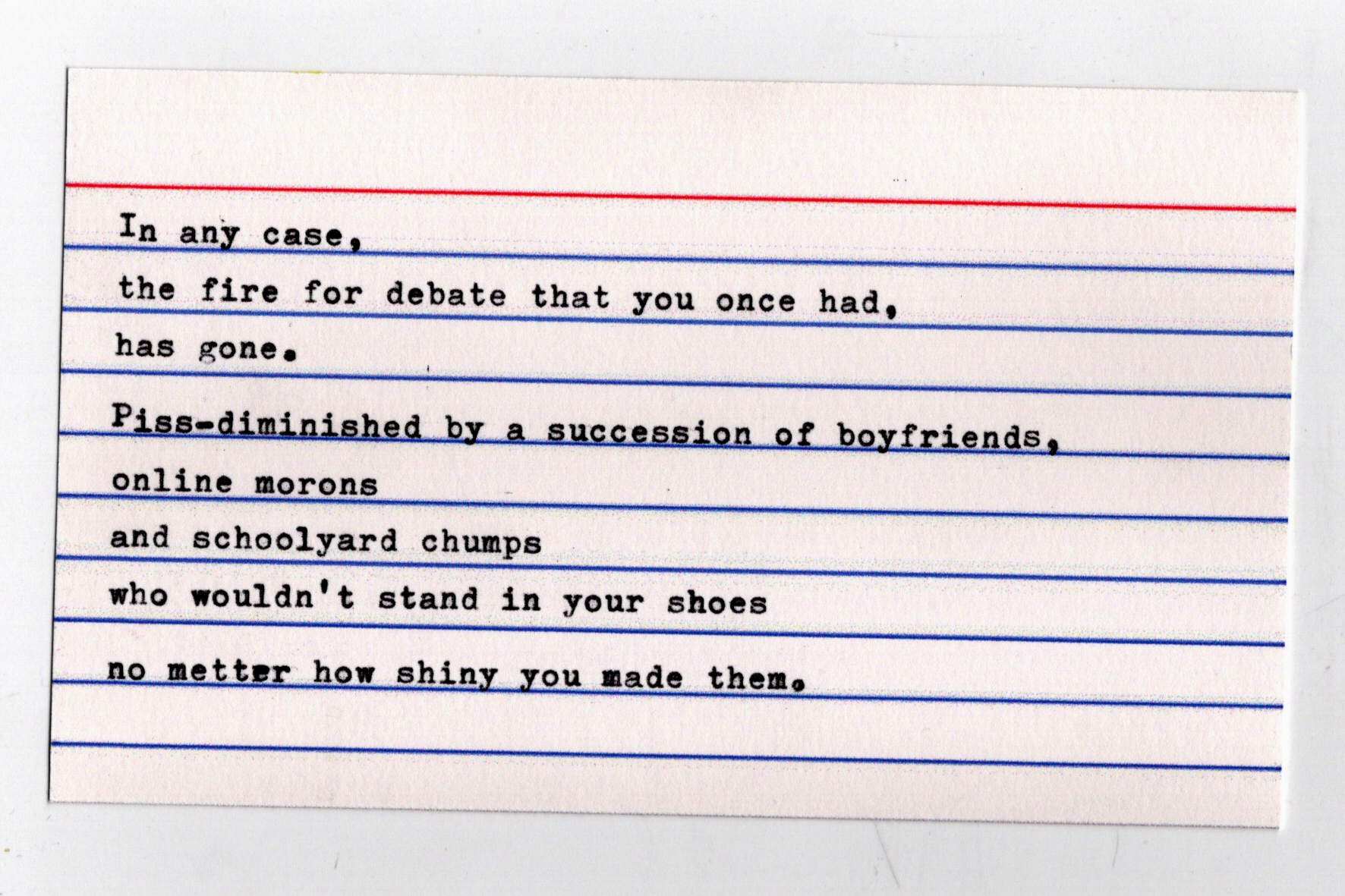
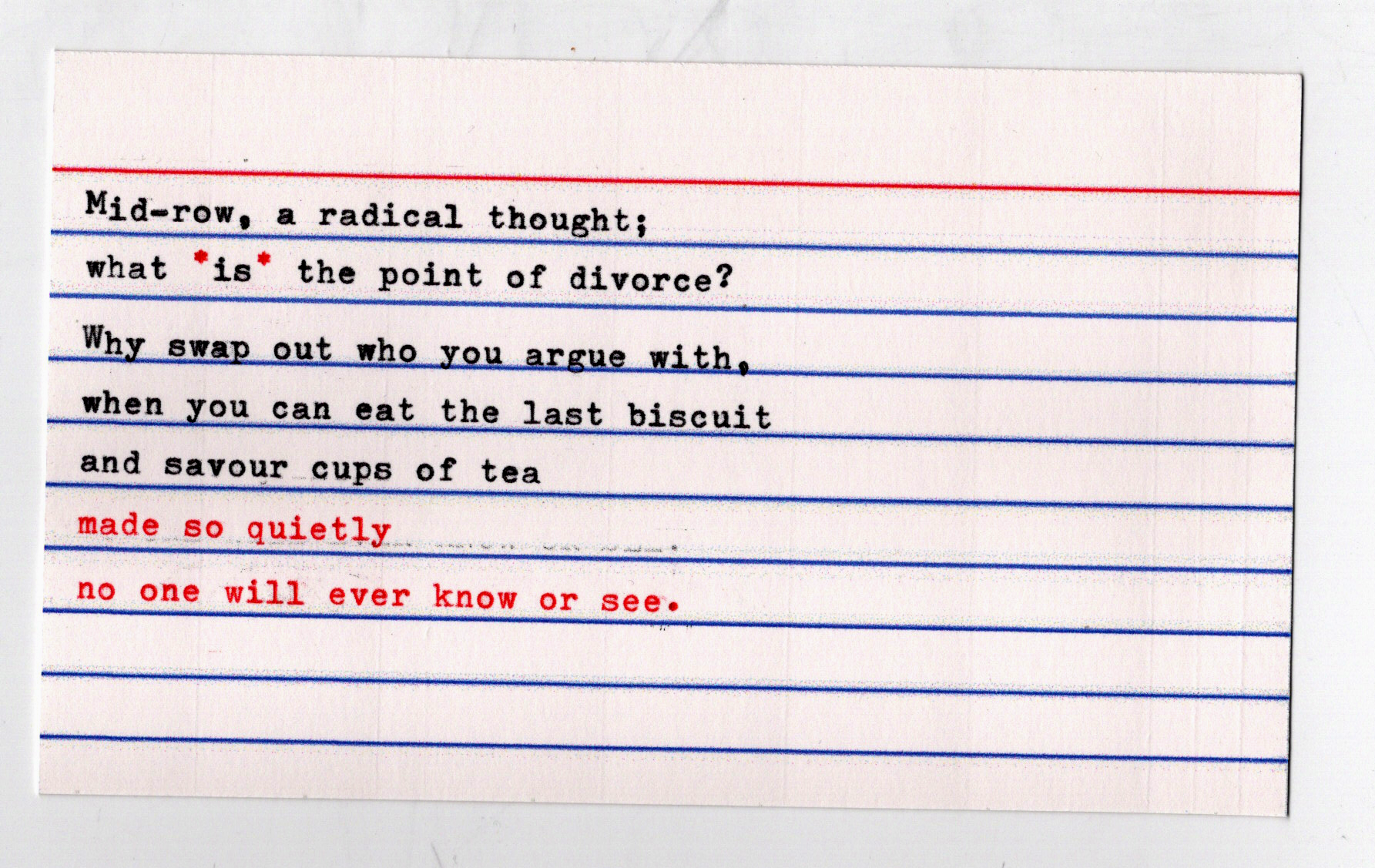
The week before the prompt arrived, I had a row with my partner. There were a few slammed doors and raised voices. We don't row very often, and I love him very dearly. But it did strike me as slightly comical when we were in the thick of it. What I find when you've been in a relationship with someone for a really long time, and we've been together for thirteen years, is the slight pointlessness of a row. When you really love someone, and you have this stupid, absurd explosion at each other, often I find that five hours later I'm not really sure what it was all about anyway. I just find that whole process really hilarious.
So it started as a poem about rows. And then I was trying to find the perfect format for that piece of writing. I started off making some etching plates. Some of them I quite liked. I liked how scratchy they were. Then I sort of panicked, but I had that line from your email go through my mind, that you weren't expecting my magnum opus. That was really helpful. But I did get into a bit of a hole because I didn't like what I was making.
I also collect really terrible advice books. I have one here called Real Life Problems and Their Solutions, and I found this section called "Should Wives Go To Work?" There's an illustration of a wife looking really pissed off while she's serving dinner, and then we see her at her day job, where she's a secretary and looks quite happy. And it says, "To make marriage possible, many young wives continue to work. Under such circumstances, they must plan for as simple and restful a domestic routine as they can. Otherwise, the double task of running home and office will be too great a strain."
Then I remembered that when I was little, my dad would come home and bring me things like little index card holders from his office. I would play bank. And my dad made me a pretend old school credit card reader (with the carbon paper) out of wood. It was brilliant. It was something about being little, and being fascinated by adult life, and wanting to try it on for size. All of this was kind of floating around as I was thinking about how to format this work, and I realized that I had to make a little stationery for the poem to sit in. My daughter has a vintage typewriter that I gave her, which I used to type up the cards. And I've been learning book binding recently, so I made a little A-to-Z style notecard holder. It has little sections inside. So I ended up typing the poem on these cards, and putting it into this little piece of filing.
It feels so fitting to take all of that rage, and literally file it away. I used to follow a blog called Passive Aggressive Notes, where people would submit notes they would see in office kitchens and stuff. I just find that kind of impotent rage really hilarious. At my first job, where I was a secretary (that was my job title at the time – I know people don't usually use that word now), I sent an email, which I had meant to send as a joke to a friend, to the person I was writing about. It was a really bad email, but I still feel slightly justified that I sent it.
How does this piece relate to the rest of your work?
I've always made things, and I've always been interested in paper. After my dad died, I found that grief was really shark-like, and I needed to be busy. I basically didn't sit down for two years. I was coming back into work after having a baby. I had always wanted to go to art school, and I decided that it was time to send myself. Because the internet exists, and I could learn something new every day. So if she had a nap for half an hour, I was going to make something. Printmaking is an art form that feels like it found me. When I started out, I was just using paper stencils, and I couldn't get over how humble the means were, and how dramatic the result. It made me giddy. I teach screen printing now, and I still get jealous that other people are doing it and I'm not. There are so many variables in print making that you can't control, so you often don't get what you thought you were going to get, but you get something better. And then you have to learn how to harness those variables, and instead of them becoming problematic, you learn how to wield them and use them as you wish.
The whole process of doing this has been really helpful and gratifying. It has forced me to think more broadly about what medium I would work in. I don't usually make objects, I usually make flat pieces, things that hang on a wall. I haven't made objects in this way, and it made me really excited about what else I could play with. That's shot me off in a new direction. I came to art as a practitioner later in life, and I'm untrained, so I don't know what the next step in my practice might be. I'm sure people who went to art school would know because they've been told what to do next.
No no no! No. No no.
I just love that this process has prompted me in a different direction that I don't think I would have immediately thought of, had I not had the time constraints.
That's wonderful to hear! Do you have any advice for another artist approaching this project for the first time?
That idea about not trying to make your magnum opus was incredibly useful advice! Although at one point I was like, “But what if it's completely shit?!”
[Laughs] it wouldn't be the first time!
That little journey is so funny. Once, when my first article was published in a national newspaper when I was a journalist, I was like a cartoon. I was lying in an empty bathtub, fully clothed, with a glass of wine, crying because they'd cut bits out [laughs]. But going through that mini drama because I really wanted to make something good is such a useful thing. My advice would be to fully engage with the highs and lows of that process, and to not be afraid to abandon ideas as you go along. Trust your instincts, and if you feel like you need to move on, do.
Call Number: V99VA | V100VA.roMe
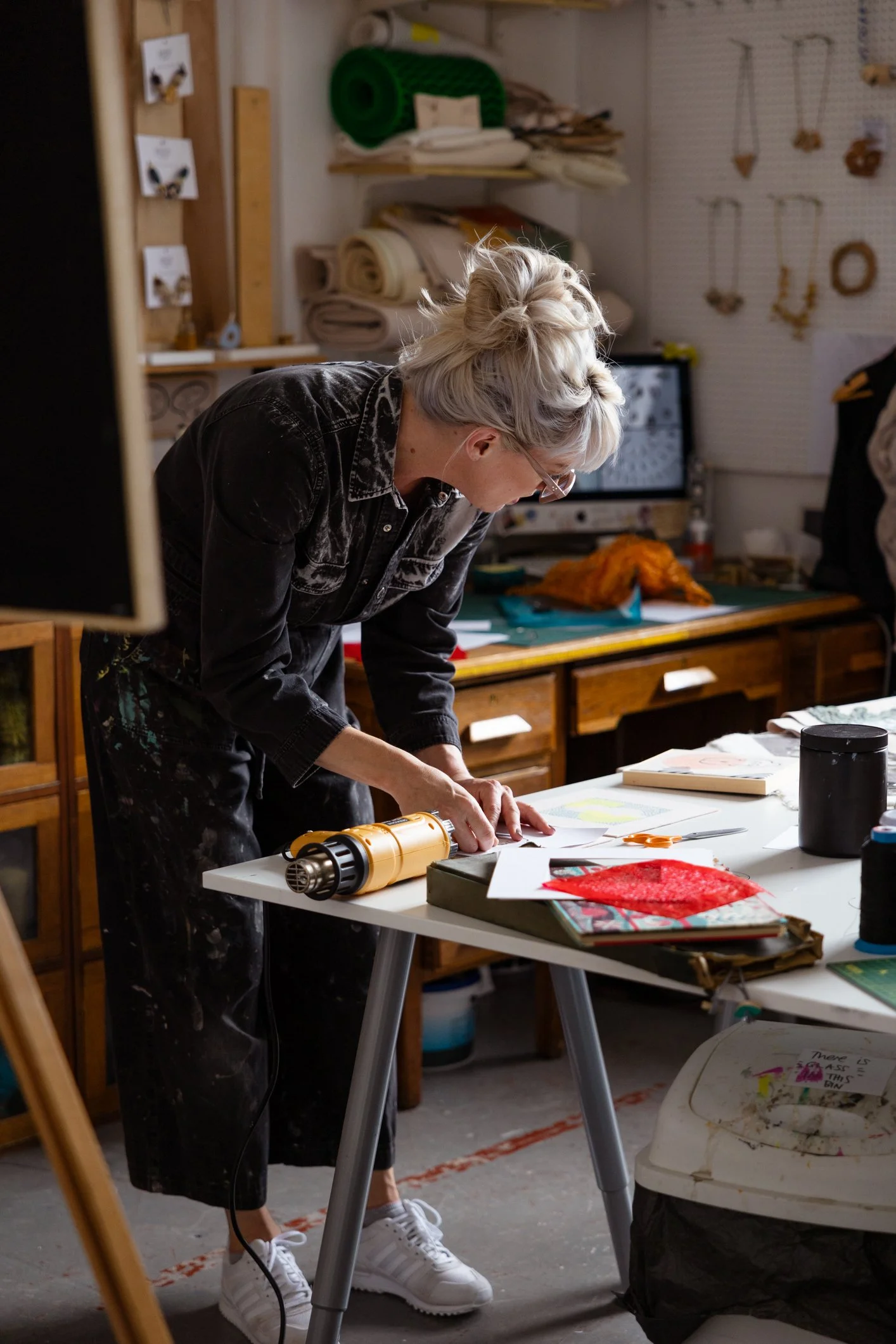
Wendy Roby: I'm a self-taught visual artist with a background in writing. I love printmaking for its combination of process and play and want to make funny, bold work about our least fine feelings. I'm based in the North of England where people have a wonderfully bleak humour, a healthy lack of pretension and no small amount of warmth. I make my own inks from natural sources, teach part-time and collect books about how to make art and develop creativity through accessible methods.